
Key takeaways
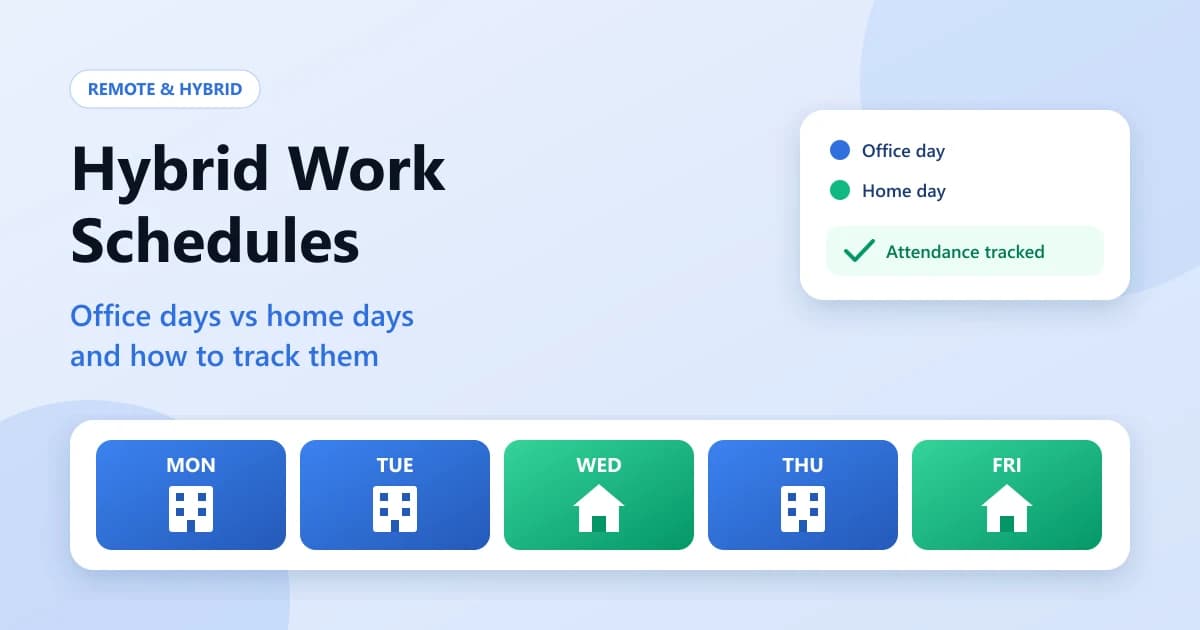
- Choose one hybrid model and write it down: fixed days, flexible days or team anchor days.
- Track attendance and working hours the same way on office days and home days.
- Compare patterns across weeks, not single days, before drawing conclusions.
- Tell the team what is tracked and why before you start.
Hybrid work sounds simple: some days in the office, some days at home. In practice, teams run into questions fast. Who is in on Tuesday? Did everyone work a full day at home? Is the schedule being followed, or has it quietly drifted? Answering these takes a clear schedule and consistent tracking.
Common hybrid schedule models
Most hybrid teams settle on one of four models. Each has trade-offs.
- Fixed days. Everyone is in the office on the same set days, for example Monday to Wednesday. It is easy to plan around, but it can crowd the office on those days.
- Flexible days. Each person picks their office days within a minimum, such as two days a week. It suits individuals, but it is harder to know who will be in.
- Team anchor days. Each team sets one or two shared days for meetings and collaboration. The rest is open.
- Split by role. Roles that need equipment or face-to-face work come in more often than others.
Write the policy down
A schedule only works if everyone reads it the same way. Put these points in writing:
- How many office days are expected each week or month.
- Core hours when everyone should be reachable, whatever their location.
- How to swap an office day and who approves it.
- What counts as a full working day at home.
What to track
Keep the measures simple and apply them equally to office days and home days.
- Attendance. When each person starts and ends their day, and their total hours.
- Active and idle time. A view of how the working day was spent, without recording screens or keystrokes.
- Schedule adherence. How often people follow the agreed office days.
- Late starts and early finishes. Patterns over several weeks, not single events.
How to set it up
- Choose the hybrid model and publish the policy.
- Group employees by team or department so you can compare like with like.
- Use attendance records as the single source of truth for hours worked.
- Review weekly summaries and monthly reports with team leads.
- Adjust the schedule when the data shows a real problem.
Read the data fairly
One short day at home says very little. A month of data says more. Look for patterns, such as a team that is always short of hours on Fridays, and talk to people before acting. Home days and office days are different working conditions, so compare each person with their own usual pattern.
Be open with your team
Tracking works best when employees know what is collected and why. Share the policy, explain that the goal is fair hours and planning, and show people their own reports. Trust is easier to keep than to rebuild.
Review the schedule regularly
Revisit the model every quarter. Check office attendance, team feedback and workload. If an anchor day is always empty or a fixed day is always full, change it. A hybrid schedule is a living agreement, not a one-time decision.